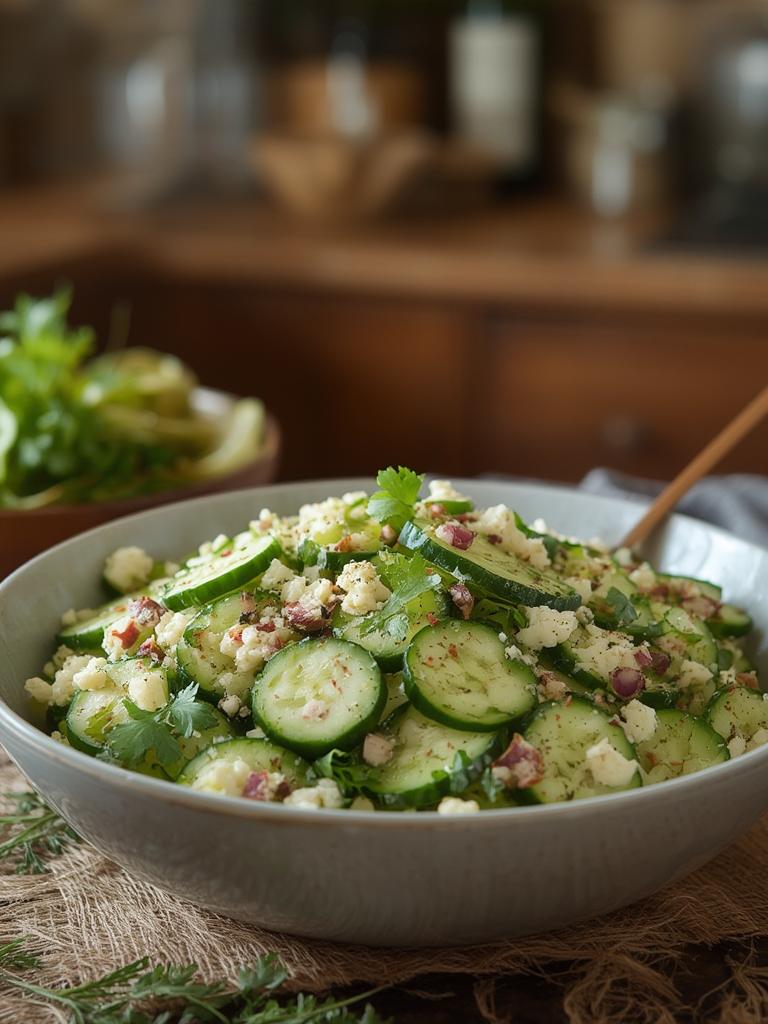
Easy Sunomono (Japanese Cucumber Salad) Recipe to Enjoy
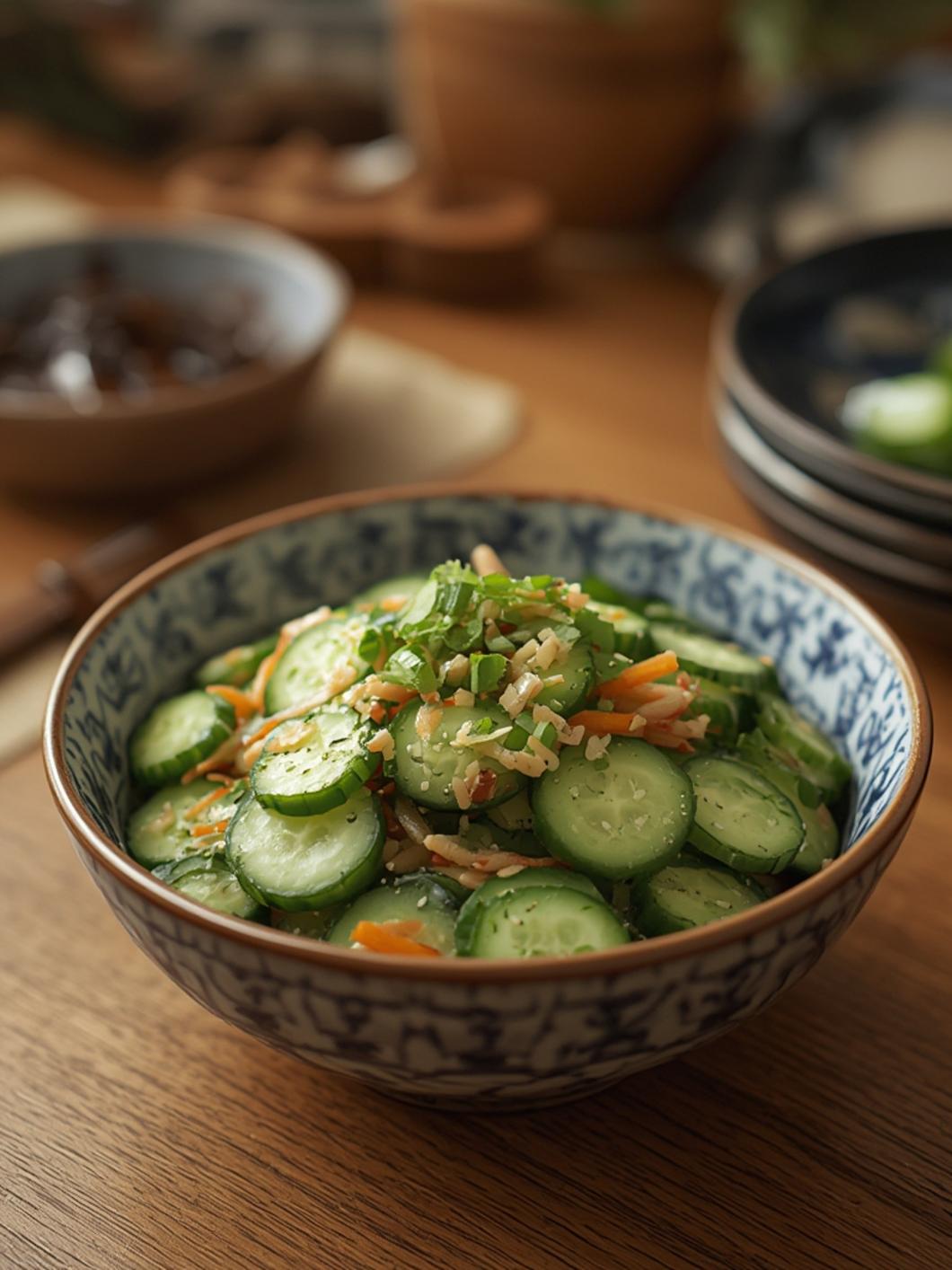
When the weather warms up, nothing hits the spot quite like a refreshing Sunomono (Japanese Cucumber Salad). This vibrant dish is not only a staple of Japanese cuisine, but it’s also incredibly easy to make at home! With its crisp cucumbers paired with a sweet and tangy dressing, this salad makes an ideal side for any meal or a light snack on its own. Experience the delightful umami flavors while enjoying this healthy option among the various Japanese salads.
Ingredients & Kitchen Tools
Ingredients
– 2 medium cucumbers
– 1/4 cup rice vinegar
– 1 tablespoon sugar
– 1 teaspoon soy sauce (make sure it’s gluten-free if necessary)
– 1 teaspoon sesame oil
– 1/2 teaspoon salt
– 1 tablespoon sesame seeds
– Optional toppings: sliced green onions or wakame seaweed
Kitchen Tools
– Vegetable peeler
– Mandolin (for slicing, optional)
– Mixing bowl
– Measuring cups and spoons
– Serving dish
Prep & Cook Time
Prep Time: 10 minutes
Total Time: 10 minutes
Servings: 4-6
Step-by-Step Instructions
1. Prepare the Cucumbers: Start by washing the cucumbers thoroughly. Use a vegetable peeler to remove the skin if desired. You can slice them thinly using a knife or a mandolin for even slices, about 1/8-inch thick.
2. Salting the Cucumbers: Place the sliced cucumbers in a colander, sprinkle them with salt, and let them sit for 5-10 minutes. This process draws out excess water and enhances the crunchiness of the cucumbers.
3. Make the Dressing: In a mixing bowl, whisk together the rice vinegar, sugar, soy sauce, sesame oil, and remaining salt until the sugar is fully dissolved.
4. Combine: Once the cucumbers have released some moisture, gently squeeze them to remove any excess fluid. Add them to the bowl with the dressing and mix until well combined.
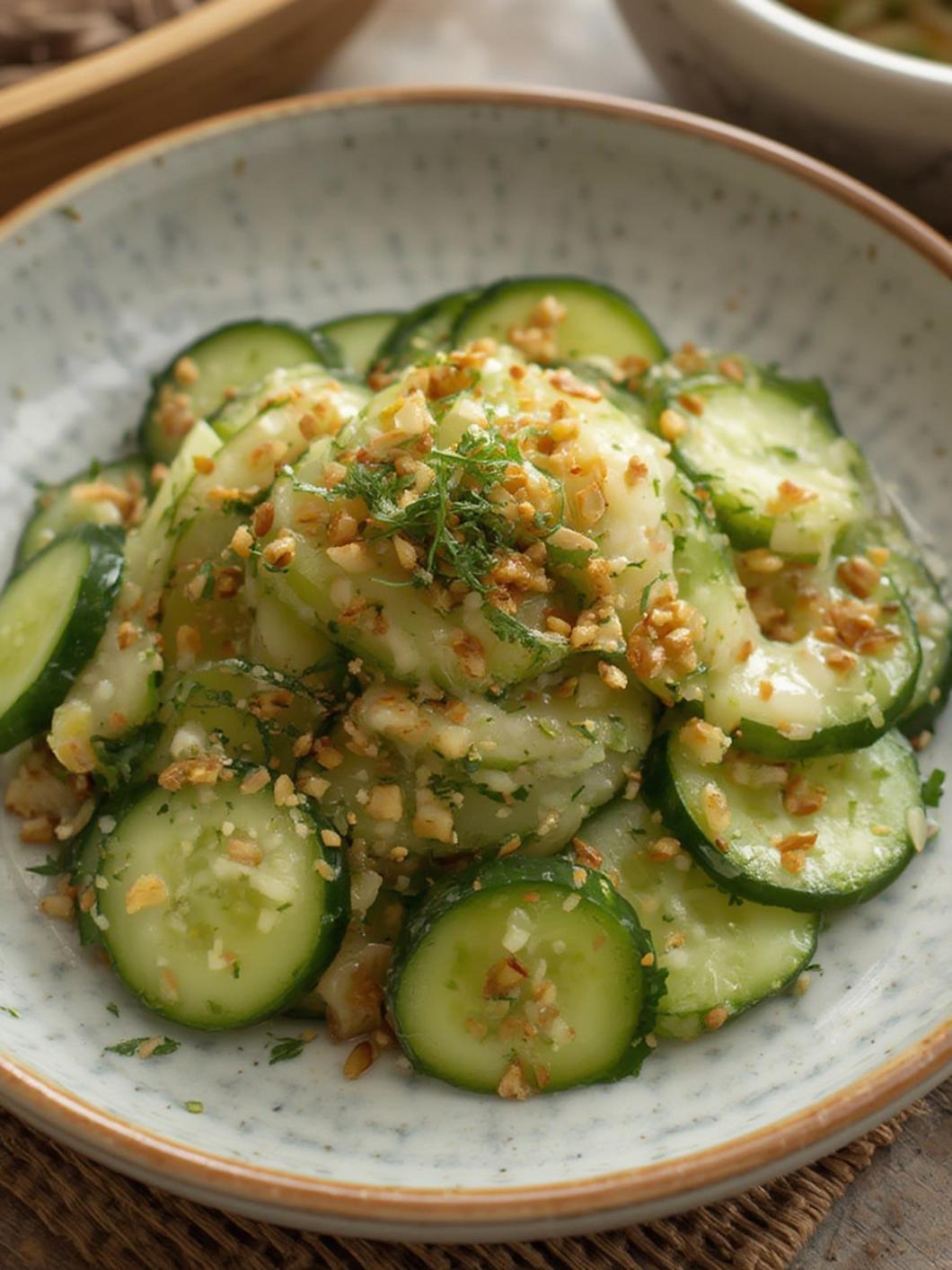
5. Garnish: Sprinkle sesame seeds over the top of the salad and add any optional toppings like sliced green onions or rehydrated wakame for added flavor.
6. Chill and Serve: For an extra refreshing taste, let the salad chill in the refrigerator for about 15 minutes before serving.
Nutritional Benefits or Advantages
Sunomono is not only refreshing but also packed with nutritional benefits. Cucumbers are low in calories and high in water content, making them excellent for hydration. This salad is also rich in vitamins A and K, and the sesame seeds provide a good source of healthy fats and protein. The rice vinegar helps with digestion and adds that distinctive tanginess that makes this dish so enjoyable.
Tips, Variations, or Substitutions
– For a spicier kick, add a few slices of chili pepper.
– You can substitute the cucumbers with other vegetables like carrots or radishes for a vibrant twist.
– Want more protein? Toss in thinly sliced tofu or shrimp.
Common Mistakes to Avoid
– Not salting sufficiently: Make sure to adequately salt the cucumbers to ensure they don’t turn out watery.
– Using overripe cucumbers: Always choose firm, crisp cucumbers for the best texture.
– Skipping the chilling: Letting the salad sit enhances the fusion of flavors; don’t rush this step!
Storage and Reheating Tips
Store any leftover Sunomono in an airtight container in the refrigerator. It’s best enjoyed fresh, but can be kept for up to two days. Note that the cucumbers will continue to release water, so give it a gentle mix before serving again.
Conclusion
Now you know how to create an easy and delicious Sunomono (Japanese Cucumber Salad) that can brighten any meal! This simple Japanese salad is a perfect introduction to Japanese cuisine and a wonderful complement to your dinner table. Give it a try! I’d love to hear how your salad turned out—leave a comment below!
FAQs
Can I make Sunomono ahead of time?
Yes, you can prep the salad ahead of time, but it’s best to serve it within 24 hours for optimal crunchiness.
What kind of cucumbers are best for Sunomono?
Japanese cucumbers are traditional, but European or Persian cucumbers work well too due to their thin skin and low seeds.
Can I add other vegetables?
Absolutely! Sunomono is versatile; feel free to include radishes, carrots, or even avocado for variation.
Is Sunomono gluten-free?
Yes, as long as you use gluten-free soy sauce, this dish can be enjoyed by those with gluten sensitivities.